Director Akio Fujimoto × Writer Chihiro Imaizumi × Médecins du Monde Japan
Understanding the Rohingya Refugee Crisis Through Fiction
About the Event
The award-winning feature film LOST LAND portrays the lives of Rohingya refugees, one of the world’s most persecuted minorities. The film received the Special Jury Prize in the Orizzonti (Horizons) section of the 82nd Venice International Film Festival. Médecins du Monde Japan, which provides medical assistance to Rohingya refugees living in camps in Bangladesh, served as a research partner for the production.
In August, Shueisha will also publish We Continue to Be Killed on 08/25: The Story of a Rohingya Couple, a new novel by writer Chihiro Imaizumi. Médecins du Monde Japan likewise provided research support for this publication.
This special event will begin with a screening of LOST LAND, followed by a panel discussion featuring director Akio Fujimoto, writer Chihiro Imaizumi, and representatives from Médecins du Monde Japan.
Although the film and the novel tell different stories through different artistic forms, both draw on extensive research and portray the experiences of Rohingya refugees through fiction. During the discussion, the speakers will reflect on the inspiration behind their work, the challenges of depicting a real humanitarian crisis through fiction, behind-the-scenes stories, and the messages they hope audiences will take away. Drawing on the firsthand experience of Médecins du Monde Japan’s humanitarian work in the refugee camps, the discussion will also explore the current humanitarian situation and the continuing challenges faced by Rohingya communities.
On 25 August 2017, more than 700,000 Rohingya fled to neighbouring Bangladesh following a campaign of violence and persecution by the Myanmar military. Since then, displacement has continued, and today approximately 1.2 million Rohingya refugees live in the camps in Cox’s Bazar, making them one of the largest refugee settlements in the world.
At the same time, international humanitarian funding has steadily declined, while refugees continue to face severe restrictions on access to food, education, healthcare, livelihoods, and opportunities for the future.
Through this event, we hope participants will gain a deeper understanding of the realities confronting Rohingya refugees and reflect on how each of us can contribute to supporting people affected by this protracted humanitarian crisis.
Please note: LOST LAND will be screened with Japanese and English subtitles.
Event Information
● Date & Time
Sunday, August 30
2:00 p.m. – 4:40 p.m. (scheduled)
• Film screening: 99 minutes
• Panel discussion: Approximately 45 minutes
● Venue
Auditorium
Saint Maur International School
83 Yamate-cho, Naka-ku,
Yokohama, Kanagawa, Japan
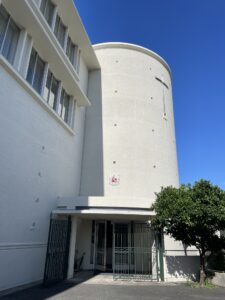
Please refer to the Saint Maur International School Access Page for directions and a campus map.
Saint Maur International School – Access
▶ Directions from Motomachi―Chukagai Station on the Minatomirai Line
▶ Directions from Myokoji Bus Stop (take bus No. 20 from Yamate Station on the JR Negishi Line)
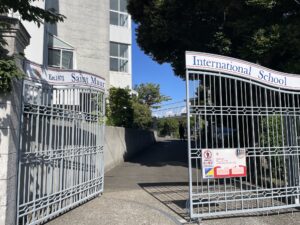 Important
Saint Maur International School has three entrances, but only the Green Gate will be open for this event.
Please enter through the entrance marked in green on the school’s access map. The Green Gate is located adjacent to Futaba Gakuen (Futaba High School) and provides the most direct access to the Auditorium.
Please note:
• Only the Green Gate will be open.
• Parking is not available.
• Please use public transportation or come by bicycle.
● Admission
Free of charge
● Registration
Registration is now closed.
● Capacity
300 participants
● Seating
Unreserved seating
● Speakers
Akio Fujimoto Director of LOST LAND
Chihiro Imaizumi Writer and Journalist
Hideaki Nakajima International Project Coordinator Médecins du Monde Japan
Speaker Profiles
Akio Fujimoto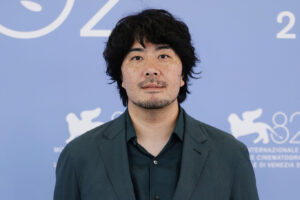 Born in Osaka in 1988, Akio Fujimoto studied filmmaking at Visual Arts College Osaka. Born in Osaka in 1988, Akio Fujimoto studied filmmaking at Visual Arts College Osaka.His debut feature film, Passage of My Youth (2017), portraying the life of a Myanmar family living in Japan, received both the Best Film Award and the Japan Foundation Asia Center Special Award in the Asian Future section of the 30th Tokyo International Film Festival. His second feature, Along the Sea (2020), depicting the lives of Vietnamese technical intern trainees in Japan, received numerous accolades, including the 3rd Nagisa Oshima Prize at the Pia Film Festival (PFF) and the Gold Prize at the 2021 Kaneto Shindo Award. His latest feature, LOST LAND, explores the lives of Rohingya refugees and received the Special Jury Prize in the Orizzonti (Horizons) section of the 82nd Venice International Film Festival. |
|---|
Chihiro Imaizumi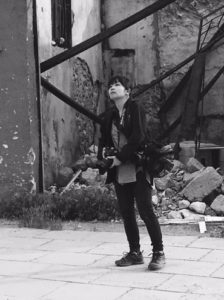 Born in Miyagi Prefecture, Chihiro Imaizumi graduated from Waseda University in 2002 and earned a Master’s degree in Media and Peacebuilding from the United Nations-mandated University for Peace (UPEACE) in 2012. Born in Miyagi Prefecture, Chihiro Imaizumi graduated from Waseda University in 2002 and earned a Master’s degree in Media and Peacebuilding from the United Nations-mandated University for Peace (UPEACE) in 2012.After working in publishing and for the United Nations, she became an independent writer and journalist. She has extensively reported on armed conflict, forced displacement, the Syrian refugee crisis, and ethnic minorities in Myanmar. Her work has appeared in leading Japanese publications including COURRiER Japon, Newsweek Japan, and AERA. Since October 2017, she has conducted extensive field research on Rohingya communities in Bangladesh, Myanmar, Malaysia, and Thailand. She is currently a doctoral candidate at the Graduate School of Asia-Pacific Studies at Waseda University and has also documented the humanitarian work of Médecins du Monde Japan. (https://courrier.jp/news/archives/315274/ https://courrier.jp/columns/298359/ ) |
|---|
Hideaki Nakajima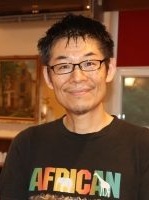 After working as a newspaper journalist, Hideaki Nakajima has served as an NGO professional and a JICA technical expert, managing health—particularly maternal and child health—programs in conflict-affected settings, including Nepal during the civil war, northern Sri Lanka, Aceh (Indonesia), Liberia, South Sudan, and Pakistan. After working as a newspaper journalist, Hideaki Nakajima has served as an NGO professional and a JICA technical expert, managing health—particularly maternal and child health—programs in conflict-affected settings, including Nepal during the civil war, northern Sri Lanka, Aceh (Indonesia), Liberia, South Sudan, and Pakistan.He joined Médecins du Monde Japan in 2020, where he continues to oversee international health programs supporting vulnerable communities. |
|---|
● Organizer and Contact
Médecins du Monde Japan
Azabu Zenba Building 2F 2-6-10 Higashi-Azabu, Minato-ku, Tokyo
Phone: +81-3-3585-6436
Email:mdm-event@mdm.or.jp


