Since 2021, Médecins du Monde Japon (MdMJ) has been working in partnership with a Bangladeshi NGO, Pulse Bangladesh Society (Pulse), to support the prevention and control of non-communicable diseases (NCDs), such as hypertension and diabetes, in both the Rohingya refugee camps and the host communities that accommodate refugees. The project focuses on raising awareness as well as strengthening the consultation and treatment capacities of local clinics.
Previously, our support targeted community clinics (CCs), which are government primary healthcare facilities, in Ramu Upazila near Cox’s Bazar City, the capital of Cox’s Bazar District. Building on the experience and knowledge gained there, we are now supporting both a hospital (Diabetes Hospital) and a CC in Cox’s Bazar City.
As in previous activities, Pulse staff first conducted training sessions for staff members at both the diabetes hospital and the CC. These trainings aimed to refresh and update knowledge on NCDs—including hypertension, diabetes, and chronic respiratory diseases—as well as on methods for measuring blood pressure, blood glucose levels, and Body Mass Index (BMI).
Following the trainings, Pulse staff worked together with each facility to develop action plans for improving the quality of healthcare services, while also conducting regular monitoring. Examples of these action plans include ensuring that used needles from blood collection are disposed of properly in designated safety boxes, since blood can be a source of infection, and maintaining accurate records for medical equipment and supplies management.
Patients can also receive an NCD patient record booklet, which is issued at facilities such as Diabetes Hospital after first undergoing health screening at a CC. During CC tours organized to deepen people’s understanding of CC services, this process is explained to community members. Blood pressure and blood glucose levels are measured during the tours, and referral letters are issued when necessary.
However, through our repeated visits to the CC screener responsible for health checkups, we have observed that there is still room for improvement in areas such as recordkeeping and documentation. In response, we have proposed incorporating these tasks into routine schedules by assigning them to specific times on designated days.
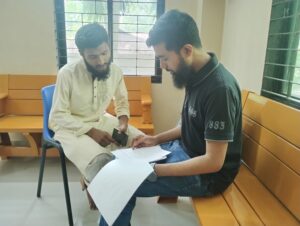
From the perspective of Japanese medical institutions, some of these practices may seem like “obvious things that should naturally be done.” However, in Bangladesh, there are still challenges such as poor settings for mutual learning, as well as unstable government supplies of medical equipment, medicines, and standardized forms.
Although our support addresses only a small part of these broader challenges, we aim to help clinical staff strengthen the foundations necessary to provide better services for patients while also creating a more manageable working environment through both solid basic practices and flexible responses to changing circumstances.
At the CCs, measles vaccinations are also currently being provided as part of primary healthcare services in response to the ongoing outbreak.
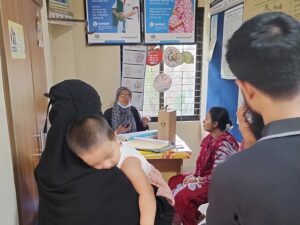
Bangladesh, too, is affected by the global situation. For example, power outages caused by fuel shortages have become increasingly frequent. Both community members and clinical staff are facing growing difficulties, but we hope to continue working together.
Project Coordinator, Hideaki Nakajima


