Since 2021, Médecins du Monde Japan (MdMJ) has been working in partnership with the Bangladeshi NGO Pulse Bangladesh Society to support the prevention and management of non-communicable diseases (NCDs), including hypertension and diabetes, among Rohingya refugees and surrounding host communities. The project combines community awareness-raising activities with support to strengthen the capacity of local healthcare facilities.
In host communities, trained volunteers currently provide group health education sessions for adults aged 20 and above, as well as individualized health education through home visits to people aged 40 and above living with NCDs. Family members are encouraged to participate in these sessions so that they can better support patients in managing their health. At the same time, MdMJ supports the capacity development of community clinics (CCs), which serve as primary healthcare facilities, and a local diabetes hospital.
CCs do not have physicians onsite, but instead, trained healthcare workers provide basic consultations and medications. Pulse staff conduct training and provide technical support on blood pressure and blood glucose screening, interpretation of results, patient counseling, record-keeping, and equipment management.
Many community members remain unaware of the services available at CCs. To address this, informational visits and orientation sessions are organized approximately three times a month, allowing residents who are interested to visit the clinics to learn about the services offered, and become more familiar with available healthcare resources.
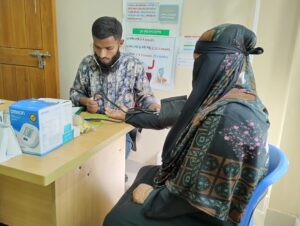
MdMJ also supports the diabetes hospital by strengthening hygiene practices, medical record management, and patient follow-up systems. In addition, group health education sessions are conducted, including practical guidance for diabetes patients on self-administering insulin injections. The project further promotes collaboration between CCs and the hospital. Individuals found to have abnormal blood pressure or blood glucose readings during screenings at CCs are referred to the diabetes hospital for further assessment and treatment. In addition, outreach medical consultations and health education events are organized every month in collaboration with the hospital. Each event typically attracts between 50 and 60 people. Many participants express their appreciation, with comments such as: “We have never had opportunities like this before, so we are very grateful.”

NCDs are the leading cause of death globally and account for approximately 71% of all deaths in Bangladesh (1). While NCDs account for around 82% of deaths in Japan due in part to its aging population (2), the figure is particularly striking in Bangladesh, where the population has more young people. It is evident that hypertension and diabetes are widespread health concerns. Health education sessions emphasize the importance of healthy diets, regular physical activity, and proper disease management. During awareness activities, participants are often asked practical questions such as “How much salt is contained in one tablespoon?” Many demonstrate amounts far exceeding the recommended levels, providing an opportunity to explain appropriate intake and healthier cooking practices. Similarly, a patient at the diabetes hospital once said, “As long as I’m taking insulin injections, I’ll be fine, right?” A volunteer used the opportunity to explain that medication alone is not enough and that maintaining healthy lifestyle habits remains essential for effective disease management.
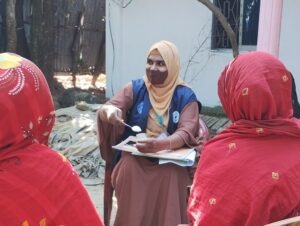
Local youth groups engaged in environmental protection and other community activities have also begun participating in outreach consultations and health education events. The director of one of the supported CCs attended a recent event and exchanged her contact with young participants afterward. Several expressed a strong interest in supporting the clinic’s activities. The enthusiasm of these young people is encouraging. Their willingness to contribute to the wellbeing of their communities demonstrates the potential for greater local ownership and sustainability. MdMJ hopes to deepen collaboration with local organizations and support the gradual transfer of some project activities to them in the future.
Preparations are also underway to strengthen healthcare services available to Rohingya refugees living in the camps. Even in Japan, continued awareness-raising about NCDs remains important. Beyond NCDs themselves, efforts are needed to reduce social stigma and misconceptions associated with chronic illnesses. There are discussions taking place in Japan about switching from using the word “糖尿病” (Japanese word for diabetes) to the word “ダイアベティス” (Loanword in Katakana; borrowed from English and has a pronunciation similar to that of “diabetes”). Doing this helps portray diabetes as a disease that does not solely result from an individual’s lifestyle choices (3). MdMJ is committed to supporting individuals affected by NCDs, empowering communities through health education, and helping create a society free from stigma and discrimination.
Project Coordinator Hideaki Nakajima
1 A Nation Unites 35 Ministries in Landmark Move to Fight Against Noncommunicable Diseases
2 Japan Health Policy NOW– Non-communicable diseases(NCDs)
3 “https://www.nittokyo.or.jp/modules/about/index.php?content_id=46”


